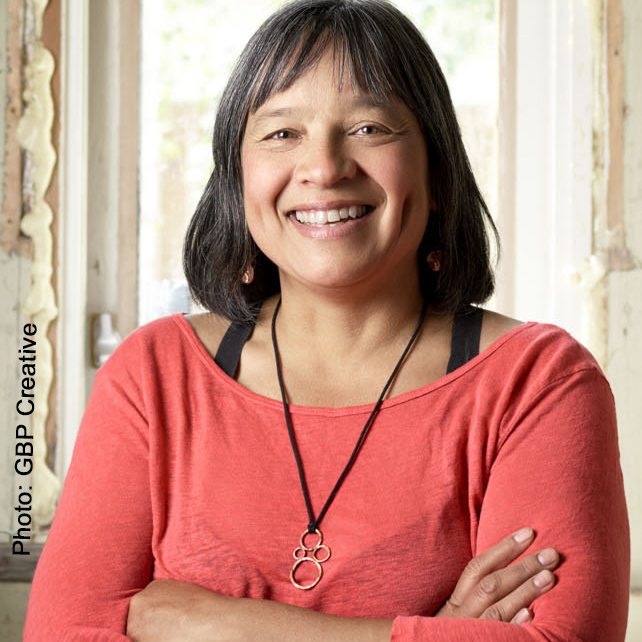
Celebrating Faye Leung’s bold spirit and community legacy.
An art installation by Yukon artist, Leslie Leong.
Nov. 15 to Dec. 27, 2025
Canton-sardine Gallery, #071 (lower level), 268 Keefer St., Vancouver, BC
Co-curated by:
Dr. Melissa Karmen Lee, CEO, Chinese Canadian Museum, Vancouver, BC
Steven Dragonn, Director/Curator, Canton-sardine, Vancouver, BC
Photographic tour of the exhibition by Steven Dragonn (and the curatorial statement) on the Canton-Sardine gallery website: Madame Maverick
Video tour of the exhibtion: coming soon

Artist Statement:
“Energetic, colourful, and cheeky, she was no angel – yet wherever she went, she affected those around her. Like the Tasmanian Devil of the Saturday morning Looney Tunes, she left a swirl of activity in her wake.“
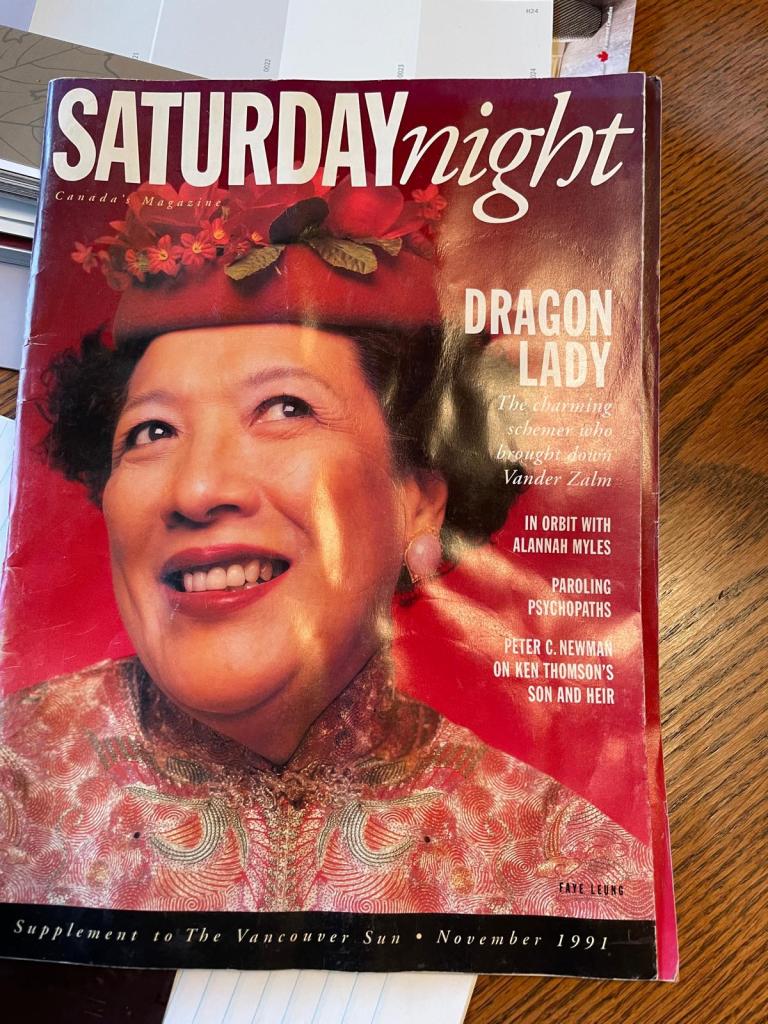
As a young adult, I once saw Aunty Faye on a Chinatown sidewalk. She was wearing a full-length sequined gown at four o’clock in the afternoon. I hid behind a friend, embarrassed to admit she was family. With time, I came to recognize the courage embedded in that moment: a Chinese Canadian woman forging her own path in male-dominated business worlds of the mid to late twentieth century, refusing to mute her individuality and insisting on taking up space. Over the decades she became known for her flamboyant wardrobe. Her staccato, high-pitched voice, long digressions, and quick thinking left a strong impression on anyone she met.
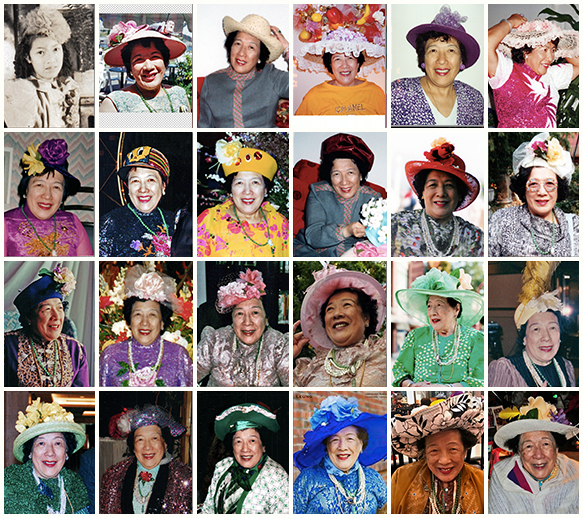
Madame Maverick celebrates the life and legacy of Faye Leung (1932–2024), Vancouver’s legendary “Hat Lady.” A fearless entrepreneur and community force, she was a singular presence in Vancouver’s Chinese Canadian community. Her flamboyance was inseparable from her strategies of self-determination and public visibility. She disrupted both gendered and racialized expectations of business decorum. By exploring the life of this unique individual, the exhibition also contributes to broader conversations about how personal aesthetics can function as resistance, cultural continuity, and political presence within minority communities.
Leung was also infamous for her role in the downfall of British Columbian Premier, Bill Vander Zalm. In the early 1990s, she brokered the sale of Fantasy Gardens, a Richmond theme park, to billionaire Tan Yu. The transaction triggered a conflict-of- interest investigation that ultimately led to Vander Zalm’s resignation in 1991. At a time when few women, especially women of Chinese heritage, held visible power in commercial real estate and high-stakes negotiations, she made her mark.
This installation grew from the experience of knowing her personally while also rediscovering her through family archives and public narratives. The Faye remembered by journalists, neighbours, business partners, and community members is not always the Faye I knew. Yet each perspective holds truth. She was a community champion, a cultural icon, a sharp-thinking entrepreneur, and a woman whose life contained both generosity and controversy.
Creating this project offered an opportunity to explore the coexistence of multiple truths. While all versions of Faye Leung are grounded in fact, none of us ever know the entirety of a person. My understanding of her comes from lived experience, research, and the recognition that people are complex; though she may have been more complex than most.
As her niece, I have mobilized the family archive as artistic material, translating the emotional charge of personal memory into contemporary installation. For me, she was my aunt: energetic, unpredictable, generous, and complicated. The many stories told about her rarely align neatly, yet each carries validity.
The form of the work—a tornado of hats—emerged almost instantly in my mind. It reflects the force she exerted on the world around her: energetic, disruptive, charismatic, impossible to ignore. She gathered everything in her path and sent it spinning in her wake.
More than just hats
Her hats were legendary. Not only for their flamboyance but for how she used them. She adorned them with imitation flowers, necklaces, earrings, hair clips, feathers, and anything else she fancied. She regularly disassembled and reassembled them.
The hats function as material traces of identity: complex, shifting, and strategic. Through her sons, Dana and Dean, I had access to hundreds of them. Twenty-nine moving boxes, each containing around twenty hats. They were extensions of her agency, ideal carriers of narrative significance. Each becomes an archival unit, a micro-history within a larger structure.
Building the armature
The armature for the tornado was fabricated from reclaimed steel and discarded flower-stand rods. Materials common in my practice. Acquiring them became a story of persistence and uncertainty, and the welding process was demanding. That struggle becomes part of the work. It echoes the labour of assembling a life from fragments, contradictions, and partial memories. The irregularities of the materials introduced productive constraints that paralleled the difficulty of reconstructing a complex life. Using unorthodox and reclaimed materials ensured the work evolved organically, much like a tornado.
The resulting formation suggests movement, turbulence, and continuity. An apt metaphor for her influence on those who knew her.
Bring it together
Once the armature was complete, the process shifted to wrapping, layering, and composing the vortex of hats. Placing them inside the tornado required patience, problem-solving, and occasional swearing. The final gesture, a sweep of hats being drawn toward the vortex, connects the piece to its environment, suggesting that the gallery itself, with its newspapers, images, and histories, might also be drawn into her wake.
Ultimately, Madame Maverick honours the many truths of who Faye Leung was. It acknowledges her brilliance and her flaws, the impact she had on others, and the space she carved out simply by being herself. The vortex holds not only her hats but the contradictions, stories, and legacies that continue to spiral outward from her remarkable life.
– Leslie Leong
Acknowledgements
This project would not have been possible without the following:
• Dana, Nina and Dean Leung families
• Dr. Mellisa Karmen Lee, CEO | Chinese Canadian Museum for curatorial support and writing
• Steven Dragonn of Canton-sardine for curatorial work and all the support that goes into installing and hosting an exhibition, including the amazing gallery space.
• The Wilfred Leong family
Permissions:
The Georgia Straight
Charlie Smith, Writer
Ian Mulgrew, Writer
CBC – Belle Puri
Materials:
Raven reCentre
Kent Metal Products Ltd.
Ocean View Cemetery
Stretch-wrap Factory
All my helpers along the way:
Richard and Lori Leong
Debbie & Randy Lum
Cindy Leong & Paul Best
Jeffrey Lee & Ted Liu
Karen Savage, Bridget Cassidy, Sherri Reed
Janet Mercer, Marney Olmstead & Jeanine Baker
Suzanne Paleczny, Tynan Leong-Best & Doug Smarch for their kinetics and electrical advice.
Funding and support:
Yukon Arts Branch – Advanced Artist Award. Their financial assistance was essential to exhibit so far from home.
Mary Bradshaw for her excitement about the project and connecting my project to Dr. Melissa Lee at the Chinese Canadian Museum.
Canada Council for the Arts maybe, my fingers are crossed, so I can pay people properly.
 Leslie Leong Arts